Showing posts with label students News Learning. Show all posts

Tuesday, 5 September 2017

Wirosableng 212 (212 Warrior)

Wirosableng 212 (212 Warrior)


                           One more Indonesian film that will go international. The story of martial arts series Wiro Sableng by Bastian Tito will be cultivated into the form of films by Fox International Productions and Lifelike Pictures (Indonesia). The film will be titled Wirosableng 212 (212 Warrior).

Flp President Tomas Jegeus, producer Sheila Timothy and executive producer Michael Werner announced the agreement on Thursday, February 9 in Jakarta.


                    Wiro Sableng is a fictional character and the main character of Indonesian silat stories based on Silat Wiro Sableng's book The Deadly Dragon Capacity of Geni 212 by the late Bastian Tito. This martial arts series is the longest and longest silat series in Indonesia, consisting of 185 titles and made over a span of 39 years (1967-2006). Bastian Tito is the father of actor Vino G. Bastian. And coincidentally, indeed Vino is appointed as the main actor in this film. Although initially confused why he was appointed, but Vino claim to be proud to represent the family as heirs of this Wiro Sableng story. Tomas Jegeus, president FlP mengatakan, "Saya sangat senang dengan keterlibatan kami dalam film Wiro Sableng 212 ini dan bangga dapat bekerja sama dengan kreatif dari Lifelike Pictures yang begitu menginspirasi. FIP merasa terhormat bisa menjadi studio Holtywood pertama yang melakukan co-production dengan rumah produksi Indonesia dan kami berharap akan lebih banyak lagi kolaborasi lainnya di masa mendatang."

"I am deeply moved, since my father wrote this, this is the first point Wiro Sableng movie will be made with the blessing of the family. There used to be Wiro Sableng series, I have not been in entertaiment, my father is just a writer. When I want to be made again with a much bigger vision and mission, this is a great honor for me. Wiro Sableng must be back there, but for the existing generation. That in Indonesia there is a legend that must be preserved silat, "said Vino who met during press conference Wiro Sableng 212 at JS Luwansa hotel, Kuningan, South Jakarta, Thursday, February 9.

                     Vino's sister-in-law, Sheila Timothy who is none other than Marsha Timothy's sister was involved as a producer. "We agreed to make the film Wiro Sableng a commercial and liked by all people. Keep referring to books. Because Wiro Sableng does not belong to the family, but has become an Indonesian legend. Fansnya still big and quite militant, "said Sheila who familiarly called Lala this. Heavy burden now rests on the shoulders of Vino as the main character. The most difficult part is to separate professionalism as an actor and nostalgic family. "Wiro Sableng belongs to his serial lovers, not just my family. When I became an actor, I was professional and had to be able to deliver Wiro Sableng. His son aja not necessarily can interpret Wiro Sableng, "said Vino who also remembered his big family message before acting in this movie.

                    "The family message, the original side should not be abandoned. But it will continue to grow following the technology. When others judge, do not value me as a family but value me as an actor. " Not only Vino, a number of other famous names will be involved in this film. Among others are Angga Dwimas Sasongko who will act as director and Sherina Munaf and Marsha Timothy as actresses. "This movie makes me very interested. I have made the same promise myself, I will do the thing that I am very interested. Seeing from team performance and sync, makes me believe that we can explore deeply. That's one factor that makes me not alone, "said Sherina.

The screenplay was written by Sheila Timothy, Tumpal Tampubolon and Seno Gumira Ajidarma. Successful Yayan Ruhiyan with The Raid, The Raid 2, Yakuza Apocalypse and Star Wars 7 movies that have been acknowledged at home and abroad, will be responsible for the movie's action choreography.
International cooperation

                    Lala said, already from the beginning he was interested to collect funding for this film to foreign parties. "I need expert from outside Indonesia. I talked to Michael. I got a positive impression from Tomas. I think Hollywood studios have the same level of arrogance we have. But Tomas is different and appreciates our local. He was interested because Wiro Sableng highlighted the cultural side. So I feel the first meeting gives a deep impression, "said Lala. Because of this international cooperation, the film Wiro Sableng 212 also plans to air first in Indonesia and then will be aired outside Indonesia. Under the agreement, the two companies will develop, produce and distribute their films throughout Indonesia, as well as possibilities in other countries. This is the first time Fox International Production has collaborated with Indonesian production houses. Previously FIP had a similar cooperation with South Korea in producing the film The Wailing and The Yellow Sea by director Na Hong Jin, one of the top 10 box office movies during 2016 in South Korea.

News about the film production plan Wiro Sableng 212 is also a talk in Hollywood. A number of international media also wrote articles about this film. Among them are Variety. The colossal big-screen movie with this fantasy comedy action genre will be produced in 2017 and planned for release in theaters by 2018

Saturday, 2 September 2017

DUA TIGA KNOWING FINLAND EDUCATION

DUA TIGA KNOWING FINLAND EDUCATION


 DUA TIGA KNOWING FINLAND EDUCATION

1. Children in Finland are not allowed to enter primary school if they are not yet 7 years of age. While in Indonesia, some schools allow children not even 7 years old - even 6 years - enter primary school. With the age of immature correct to get education in elementary school, children will be saturated and tend not optimal educational mengenyam.
2. Finnish teachers have other systems to assess students, not from exams and homework. This is at least done until they step on teenagers.
3. Unlike in Indonesia, in Finland, children are not measured from their first 6 years of education. In Indonesia, the first 6 years of schooling, that is, in elementary school, they have been assessed. Their value is considered to affect achievement.
4. There is only one mandatory standard test in Finland, when they are 16 years old. In Indonesia, 1st grade elementary school has been burdened with the final exam of the semester.
5. All children, smart or not, study in the same class. In Indonesia, there are acceleration classes, there are regular classes, there are also international classes. The class seemed to be a chasm.
6. 30 percent of children in Finland are awarded a 9-year scholarship for the school. In Indonesia, scholarships (formerly) are very difficult to obtain.

7. 66 percent of children in Finland are educated to college. In Indonesia many children drop out of school.
8. There is no gap that is too wide that distinguishes the brightest and most left behind students in the classroom. In Indonesia, the smart and who are considered left behind are very visible.
9. Science classes in Finland have a maximum of 16 students so they can practice and conduct research. In Indonesia, only certain schools have laboratories that meet the standards. It was used by many students.
10. 93 percent of Finns are high school graduates. In Indonesia, less than half the population enrolled in higher education.
11. 43 percent of Finnish high school students choose a vocational school. In Indonesia, vocational schools are marginalized.
10 Illustrations of Sweetness 'Sweet' New Couple Marry That Make Baper Aware Girls, It's 7 Signs Boys Just Love Your Paras Only
The beautiful series of Wedding Traditional Wedding Procession Raisa Sunda
12. Elementary students have 75 minutes of rest time a day. In America less than 30 minutes, while in Indonesia only 15 minutes.
13. Teachers spend only 4 hours in class. Meanwhile, 2 hours a week teachers get professional development education.
In Indonesia, teachers are 48 hours in class.

14. In Finland, the number of teachers and students is equal. Indonesia, especially in 3T areas, is short of teachers.
15. School fees are 100 percent funded by the state. In Indonesia, the budget for the Ministry of Education is cut.
16. All teachers in Finland must have master titles and are fully subsidized by the government. In Indonesia not all teachers graduate S1. If you want to pursue further education, most pay themselves.
17. The national curriculum is only a guide. The rest is flexible. The national curriculum in Indonesia is rigid and less flexible.
18. 10 percent of teachers are selected from 10 well-known and selected universities that are the best graduates in their universities.
19. In 2010, 6,600 people competed for 660 SD teacher training seats.
In Indonesia, elementary teachers are not considered prestigious jobs.
20. The average starting salary for teachers in Finland was 29 thousand US dollars in 2008.
In Indonesia, the average teacher salary does not meet the UMP or UMR.
21. In Finland, no salary is inappropriate for teachers. In Indonesia there are still teachers who receive a salary of 300 thousand rupiah a month.
22. Teachers are just as prestigious as doctors and lawyers. In Indonesia teachers are ignored.
23. In the calculation of international standards in 2001, Finnish children were interested in science, reading, and mathematics.


READ ALSO : BERBAHASA INGGRIS DENGAN BAIK

Wednesday, 9 August 2017

Profile or Biography of President Soekarno


 kunci

                             Profile or Biography of President Soekarno the Proclaimer. Probably until now he is the most widely admired person in Indonesia. Many people are looking for a short life journey, profile or biography of Sukarno. Known as the first President of the Republic of Indonesia as well as the originator of Pancasila, he is more familiar in call Bung Karno is from Blitar, he is a hero of the Proclamation along with Mohammad Hatta. President Soekarno was highly respected by the leaders of the countries of the world at that time. Soekarno was born in Surabaya precisely on June 6, 1901 with the original name named Koesno Sosrodihardjo, because often sick that may be caused by his name is not appropriate then he then changed the name to Soekarno.


The life of President Soekarno
His father was named Raden Soekemi Sosrodihardjo and a mother named Ida Ayu Nyoman Rai. His parents met in Bali when his father became a teacher in Bali and his mother was a nobleman in Bali. Soekarno is known to have a sibling or sister named Sukarmini.

Childhood and Young Sukarno

                   Regarding the life story of President Soekarno, as a child he did not live with his parents who are in Blitar. He lives with his grandfather named Raden Hardjokromo in Tulung Agung, East Java. Soekarno even went to school there although not to finish along with his parents moved to Mojokerto.In Mojokerto, Soekarno was then schooled at Eerste Inlandse School where his father also worked there as a teacher. However, he was transferred in 1911 to an ELS (Europeesche Lagere School) at the elementary school level to be admitted to HBS (Hogere Burger School) in Surabaya.
                After graduating and attending HBS in 1915, Sukarno then lived in Haji Oemar Said Tjokroaminoto or H.O.S Cokroaminoto house, which is a friend of Soekarno's father. Soekarno, Kartosuwiryo and Muso .H.O.S Cokroaminoto is known as the founder of the Islamic Union (SI). It was at Cokroaminoto's house that Soekarno became acquainted with Sarekat Islam (SI) leaders such as Haji Agus Salim and Abdul Muis. Soekarno is also familiar with Muso, Alimin, Darsono and Semaun who later became known as leftist and Kartosuwiryo who later founded Darul Islam and led the rebellion against Sukarno, although in the end Sukarno himself who signed the death sentence execution against Kartosuwiryo who became his friend when he was young .

               They together live in H.O.S Cokroaminoto's house to gain knowledge and learn to organize through Sarekat Islam (SI). Here the nationalist spirit of the nation of Indonesia becomes very big. Soekarno also took part in a youth organization in 1918 named Tri Koro Darmo which later changed its name to Jong Java. Sukarno was even active as a writer in a daily newspaper called Oetoesan Indies run by Cokroaminoto. At Cokroaminoto's house, young Soekarno began to study politics and also learn to make speeches even though he tends to do himself in front of a mirror in his room. At his school Hoogere Burger School or HBS, Soekarno got a lot of knowledge


In 1921 after graduating from Hoogere Burger School or HBS, the young Soekarno then moved to Bandung and stayed at Haji Sanusi's house. Soekarno then became familiar with Douwes Dekker, Tjiptomangunkusumo, and Ki Hajar Dewantara.

                   Soekarno then went to Technische Hoogeschool (THS) majoring in civil engineering. Technische Hoogeschool (THS) will become ITB (Institute Technology Bandung) as it is now. In the same year of 1921, Soekarno married Siti Oetari the eldest son of H.O.S Cokroaminoto. Soekarno quit his lecture after two months of admission in THS but in 1922 he signed up again and then started college and then graduated on May 25, 1926 with the title of Ir (Engineer). Graduated from THS, Soekarno established the Bureau of Engineers in 1926 with Ir. Anwari who worked on design and building design. He also works with Ir. Rooseno designed and built houses. While in Bandung, Soekarno founded Algemeene Studie Club (ASC) which later became the forerunner of the Indonesian National Party which was established on July 4, 1927. Here Sukarno then began to practice the teachings of Marhaenism. The purpose of the formation of the National Party of Indonesia is for the Indonesian nation to be independent and independent of the Dutch colony.


Soekarno Jailed By The Colonial Government
From this Sukarno courage then the Dutch colonial government arrested him in Yogyakarta and put him into Banceuy prison in Bandung. Then in 1930, Sukarno was transferred to the Poor Suka prison.

In this prison the necessities of his life all came from his loyal wife who accompanied him Inggit Ganarsih who married Sukarno in 1923 which previously Sukarno had divorced Siti Oetari well while still in Bandung.


Inggit who is also assisted by Sukarno's sister named Sukarmini often brings food to Soekarno in the prison of Poor Suka, that is what then makes the supervision in prison Suka Miskin increasingly tightened.

According to the biography of President Soekarno from several sources, he was known Dutch as a prisoner who was able to incite others to think for independence so that he then considered quite dangerous.


He was then isolated with his elite prisoners to avoid getting information coming from outside the prison. These elite prisoners are predominantly Dutch citizens who have cases such as embezzlement, corruption and misappropriation.

This is the goal of the Netherlands for the topic of the discussion on how to free Indonesia is not appropriate because the average elite prisoner with Sukarno is Dutch.

The topics he used to hear were not as important as the food in prison and the weather. For months in Poor Suka caused Sukarno to break up communication with his comrades, but it was not difficult for him to get information from outside.


Soekarno finally found a new idea, where he uses eggs as a medium to communicate with his wife. If a friend of Sukarno experiencing disaster or get bad news then the egg brought by his wife is salted eggs, that too he can only guess because he did not know exactly what happened out there. To speak with Inggit, Soekarno was closely monitored and also the luggage carried by the inggit from outside the prison was always thoroughly examined.

Biography of President Soekarno
Then Soekarno and the inggit finally found the way he considered the easiest in communicating to be unknown by the Dutch with the same medium before the Egg where the way used slightly different that is by piercing needles into the egg. If one puncture on the egg is good news, if a double puncture on the egg means a friend of Sukarno is caught but if there are three punctures it means that the captured independence activist is big enough.

During his time in prison, his parents never once visited Sukarno, his reason was that Sukarno's parents could not see Soekarno imprisoned, he was thin and black while in prison because that was what Wardoyo's mother thought so that Soekarno's parents did not want to visit Sukarno. So that his parents do not panic Soekarno often reasoned that he often work under the sun so that his skin blackened besides in prison he wanted to heat his bones because in prison, the room is very dark, damp and also cold because no sunlight.

Soekarno and Defense "Indonesia Sues"
His case was tried by the Dutch through a Landraad court in Bandung, when it had been eight months on December 18, 1930. Soekarno in his defense made a famous title "Indonesia Menggugat". Where he reveals that the Dutch as a greedy nation that has oppressed and deprived the independence of the Indonesian Nation.

From his defense that later made the Dutch increasingly angry that the PNI formed Soekarno dissolved in July 1930. After leaving the prison in December 1931, Sukarno then joined the Partindo in 1932 because he had no party anymore and he was then asked as leader of Partindo but he again captured by the Dutch and then exiled to Flores.

Dumped into Bengkulu and Met with Mohammad Hatta and Fatmawati

In 1938, he was later exiled to Bengkulu, where Soekarno met Mohammad Hatta who would become his comrade companion, who would later proclaim Indonesian independence.

In Bengkulu also Soekarno then acquainted with Fatmawati who later became the wife of Sukarno and first lady. Fatmawati is the daughter of Hassan Din who invites Sukarno to teach at the Muhammadiyah School in Bengkulu.


Soekarno and Jalan Berliku Towards Indonesian Independence
Japan even appointed Soekarno to lead the preparation team for the independence of the Indonesian nation, namely BPUPKI and PPKI after promising to give independence for Indonesia. Sukarno even had time to fly to Japan to meet with Emperor Hirohito.

Soekarno continues to approach and cooperate with Japan with the aim that Indonesia will soon be granted independence. All preparations for Indonesian independence were made by Soekarno as formulated Pancasila and the 1945 Constitution as the ideology and state base and the formulation of the text of the proclamation of independence with Mohammad Hatta and Ahmad Soebardjo.

Before announcing the independence of Indonesia in August 1945, Soekarno with Mohammad Hatta along with other Indonesian leaders flew to Dalat, Vietnam to meet the highest leaders of the Japanese empire in Southeast Asia, Marshal Terauchi. Ahead of the proclamation of independence, there is a difference of views between the old and the old.


Occurrence of Rengasdengklok Event
The Old Group wants Indonesian independence to be well prepared and young people want the independence of Indonesia to be proclaimed as soon as possible. This is what then made the younger group to kidnap Sukarno and Mohammad Hatta on 16 August 1945.

Both were then taken to the Rengasdengklok area in order to immediately proclaim Indonesian independence and keep it away from Japanese influence. This kidnapping event came to be known as the Rengasdengklok Event.

Knowing Soekarno and Mohammad Hatta was brought to
Advertisement


Rengasdengklok makes Ahmad Soebardjo then pick up Soekarno and Mohammad Hatta. Sutan Syahrir, who is known to be at odds with Soekarno, is angry to hear the young people kidnap Sukarno and Hatta and order them to get him back to Jakarta.

Arriving in Jakarta, Soekarno and Muhammad Hatta along with other leaders met with Admiral Maeda at his home on Jl. Imam Bonjol. Admiral Maeda later assured the safety of Sukarno and other leaders and invited Soerkarno and Muhammad to formulate the text of the proclamation of independence. Together with Ahmad Soebardjo, the three of them formulated the text of the proclamation of independence which was then re-typed by Sayuti Melik.

Proclaimed Indonesian Independence and Became the First President of Indonesia
On August 17, 1945, Soekarno and Moh Hatta also proclaimed the independence of Indonesia from Japanese occupation which on that date is also celebrated as the Independence Day of Indonesia where Pancasila was formed by Soekarno as the foundation of the state of Indonesia.

This proclamation of independence then brought Ir. Soekarno together with Mohammad Hatta was appointed as the First President and Vice President of the Republic of Indonesia in the history of the Indonesian nation.

Beyond his figure as the father of the Indonesian nation, not many know if Soekarno ever married as many as nine times, a remarkable charisma owned by Sukarno through the narrative of those close to him, that is why beautiful women can easily be captivated by him and made his wife. He was attracted to a simple woman and also politely dressed.

His wife Fatmawati once asked President Soekarno about a woman who looked sexy but she replied that women with a polite and simple appearance and also appear as it is more interesting to be liked because the beauty of a woman is seen from its authenticity or simplicity.

Soekarno does not like sexy-looking women like wearing tight short skirts and wearing lipstick like modern people in general, believe or not American artist Marylin Monroe is very fond of the charisma of a President Sukarno.



Tuesday, 1 August 2017

Biography of President Soeharto

Biography of President Soeharto

 kunci

                    Suharto is the second President of the Republic of Indonesia. He was born in Kemusuk, Yogyakarta, on June 8, 1921. His father was named Kertosudiro a farmer who also as a lurah lurah in irrigated rice fields, while his mother named Sukirah. Soeharto attended school when he was eight years old, but moved frequently. Originally schooled at the Village School (SD) Puluhan, Godean. Then move to SD Pedes, because her mother and her husband, Mr. Pramono moved house, to the South Kemusuk. However, Mr. Kertosudiro then transferred him to Wuryantoro. Soeharto was entrusted to the house of his sister who married Prawirowihardjo, a peasant mantri.


                        Until finally elected as an exemplary soldier at Sekolah Bintara, Gombong, Central Java in 1941. He officially became a member of the TNI on October 5, 1945. In 1947, Suharto married Siti Hartinah a child employee Mangkunegaran. Lieutenant Colonel Suharto and Siti Hartinah took place on December 26, 1947 in Solo. It was the age of Soeharto 26 and Hartinah 24 years old. They were blessed with six sons and daughters; Siti Hardiyanti Hastuti, Sigit Harjojudanto, Bambang Trihatmodjo, Siti Hediati Herijadi, Hutomo Mandala Putra and Siti Hutami Endang Adiningsih.

READ ALSO :PRESIDENT SOEKARNO


Major General H.M. Suharto has traveled a long way in his military and political career. In the military, Pak Harto started from the rank of sergeant KNIL soldiers, then PETA commander, regiment commander with rank of Major and battalion commander of Lieutenant Colonel.

In 1949, he managed to lead his troops to reclaim the city of Yogyakarta from the hands of the Dutch colonists at that time. He has also been the Guard of Great Commander Sudirman. In addition, he was once Commander of Mandala (liberation of West Irian). October 1, 1965, erupted G-30-S / PKI. Suharto took over the Army leadership. Besides being inaugurated as Pangad, General Soeharto was appointed as Pangkopkamtib by President Soekarno. In March 1966, General Soeharto received the March 11 Order from President Sukarno. His job, restoring security and order and securing the teachings of the Great Leader of the Bung Karno Revolution.

                     Due to the worsening political situation after the outbreak of the movement, the Special Session of the MPRS, March 1967, appointed Soeharto as Presidential Officer, confirmed as President of the Second RI, March 1968. Soeharto ruled for more than three decades over six elections , until he resigned, May 21, 1998. After being treated for 24 days at Pertamina Central Hospital, South Jakarta, former president Soeharto eventually died on Sunday, January 27, 2006). Suharto died at 13:10 pm at the age of 87.


Wednesday, 12 July 2017

Biography of B.J Habibie

Biography of B.J Habibie 


 bj habibie


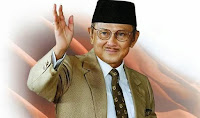
                             Many people are looking for a short story, profile or biography of B.J Habibie. He is one of the role models and a pride for many people in Indonesia, in addition to being known as the most intelligent people in Indonesia, he is also known as the third president of the Republic of Indonesia. His full name is Prof. DR (HC). Ing. Dr. Sc. Mult. Bacharuddin Jusuf Habibie. He was born in Pare-Pare, South Sulawesi, on June 25, 1936. He is the fourth of eight children, Alwi Abdul Jalil Habibie and RA. Tuti Marini Puspowardojo.

Habibie who married Hasri Ainun Habibie on May 12, 1962 is blessed with two sons namely Ilham Akbar and Thareq Kemal. Habibie's childhood was spent with his brothers in Pare-Pare, South Sulawesi. The strict nature of adhering to principles has been shown by Habibie since childhood. Habibie who has a hobby of riding and reading is known to be very intelligent while still in primary school, but he must lose his father who died on September 3, 1950 because of a heart attack while he was praying Isya.Shortly after his father died, his mother then sold his house and vehicle and moved to Bandung with Habibie, after his father's death, his mother worked hard to finance the lives of his children, especially Habibie. Because of his willingness to learn Habibie then studied at Gouvernments Middlebare School. In high school, he began to look prominent in his achievements, especially in exact subjects. Habibie became a favorite figure in his school.


Enter ITB and Lecture in Germany

                        Because of his intelligence, After graduating high school in Bandung in 1954, he entered at the ITB (Institut Teknologi Bandung), It was not until it ends there because he received a scholarship from the Ministry of Education and Culture to continue his studies in Germany, because given the message Bung Karno about the importance of mastering technology The national vision of Maritime Technology and Aerospace Technology in Indonesia at that time is still developing. At that time the Indonesian government under Soekarno vigorously financed hundreds of Indonesian smart students to study abroad to study there. Habibie is the second group among hundreds of high school students who are specifically sent to various countries. Habibie then chose the Aviation Engineering department with an Aircraft Construction specialization at Rhein Westfalen Aachen Technische Hochschule (RWTH).

The education that Habibie has attended abroad is not a crash course but a school for many years while practicing. From the beginning Habibie was only interested in 'how to build commercial aircraft' for the Indonesian people who became Soekarno's idea at that time. From there emerged strategic companies, there is PT PAL and one of them is IPTN.

                 When he arrived in Germany, Habibie was determined to be seriously observed and must succeed, given his mother's efforts to pay for college and his daily life. A few years later, in 1955 at Aachean, 99% of Indonesian students studying there were awarded full scholarships. Only he has a green or private passport from his other friends. Holiday season is not a holiday for him just a golden opportunity to be filled with exams and make money to buy books. After the holiday, all activities are set aside except for study. Unlike his other friends, they are; More use summer vacation time to work, looking for experience and money without taking exams. He earned an Ing graduate degree from Technische Hochschule, Germany in 1960 with a Cumlaude (Sempurna) grade with an average grade of 9.5. With an engineer he signed up to work at Firma Talbot, a German railway industry.

At that time Talbot Firm needed a large-volume wagon to transport lightweight but large volumes.
Talbot requires 1000 wagons. Given such a problem, Habibie tried to apply the means of constructing the wings of the airplane he applied to the wagon and finally succeeded.

                    Afterwards he continued his studies for a Doctorate at the Technische Hochschule Die Facultaet Fuer Maschinenwesen Aachen then Habibie married in 1962 with Hasri Ainun Habibie who was later transported to Germany, his life became harder, early in the morning Habibie sometimes had to walk quickly to the place work away to save the necessities of life then go home at night and learn to college. His wife Mrs Hasri Ainun Habibie had to queue at a laundering site to wash clothes to save the family's life needs. In 1965 Habibie earned a Dr. Ingenieur with summa cumlaude (Very perfect) with an average rating of 10 from Technische Hochschule Die Facultaet Fuer Maschinenwesen Aachen.


Habibie Factor Formula

               The formula found by Habibie is named "Factor Habibie" because it can calculate crack propagation or rack propagation on random to the atoms of an aircraft so he was dubbed as "Mr. Crack". In 1967, became Professor of honor (Professor) at the Bandung Institute of Technology. From the same place in 1965. This genius and achievement led Habibie to be recognized by international institutions, among them, Gesselschaft fuer Luft und Raumfahrt (Institute of Aeronautical Space and Space) of Germany, The Royal Aeronautical Society of London (England), The Royal Swedish Academy of Engineering Sciences (Sweden), The Academie Nationale de l'Air et de l'Espace (France) and The US Academy of Engineering (United States). Meanwhile, Habibie's awards include Edward Warner Award and von Karman Award which is almost equivalent to the Nobel Prize. In the country, Habibie received the highest award from Bandung Institute of Technology (ITB), Ganesha Praja Manggala Bhakti Kencana.

READ ALSO : PRESIDENT SOPEKARNO

Habibie's steps are much admired, full of controversy, many admirers but not a few who disagree with him. Each time, the prestigious award winner Theodore van Karman Award, it's back from his "habitat" of Germany, he always made the news.
Habibie is only a year of study at ITB Bandung, 10 years of college until he got a doctorate degree in aircraft construction in Germany with Summa Cum laude title.
Then worked in the leading aircraft industry MBB Gmbh Germany, before meeting President Soeharto's call to return to Indonesia.

               B.J Habibie Returns to Indonesia and Creates First Artificial Aircraft Indonesia

                      In Indonesia, Habibie 20 years as State Minister of Research and Technology / Head of BPPT, lead 10 state-owned enterprises Strategic Industries. In 1995, Habibie successfully led the manufacture of N250 Gatot Kaca aircraft which is the first Indonesian-made aircraft. Habibie's N250 aircraft at that time was not an airplane made at random. Designed in such a way by Habibie, the N250 aircraft of his creation has flown without experiencing the 'Dutch Roll' (excessive flight term for airplane), the aircraft technology is very sophisticated and Habibie prepared for the next 30 years.

Habibie took 5 years to complete the initial design. N250 Gatot Kaca aircraft is the only turboprop aircraft in the world that uses technology 'Fly by Wire'. N250 Gatot Kaca aircraft has flown 900 hours according to Habibie and one more step into the FAA (Federal Aviation Administration) certification program. PT IPTN even built a special factory N250 aircraft in America and Europe for the markets of those countries, although at that time many who underestimate the plane made in Indonesia, including some in the country.

When IPTN under Habibie's command has begun to win and employs 16,000 people, Suddenly President Soeharto decided that IPTN was closed and so was with other strategic industries. This was done when the storm of monetary crisis hit Indonesia between 1996-1998. another IPTN closure when it was Indonesia received financial assistance from the IMF (International Monetary Fund) where one of the conditions is to stop the project making the N250 aircraft which is the pride of Habibie. All the experts working in IPTN and other strategic industries are forced to spread and work abroad, most of them scattered in various countries, especially aircraft factories in Brazil, Canada, America and Europe.

 .... I said to the President, my love money 500 million dollars and N250 will be the greatest plane that beat ATR, Bombardier, Dornier, Embraer etc. and we do not need to depend on any country. But the decision has been taken and the 16 thousand IPTN employees have to earn a fortune in the land of people and crazy again we are buying aircraft from their country! - B.J Habibie
Habibie Becomes President of the Republic of Indonesia
After the closing of IPTN, Habibie, then Minister of Research and Technology (Menristek), was appointed Vice President of Indonesia on 14 March 1998 to accompany Suharto in the VII Development Cabinet. He served as vice president only a few months until 2 May 1998.

The great political turmoil and reforms demanded by Indonesians peaked in May 1998. The resignation of President Soeharto on 21 May 1998 with the announcement of his resignation made B.J Habibie subsequently officially succeeded him as President of the Republic of Indonesia. He was sworn by the Chief Justice of the Supreme Court to become President of Indonesia replacing Suharto became President of the Republic of Indonesia to 3.

                   Soeharto surrendered the presidency to Habibie under Article 8 of the 1945 Constitution. BJ Habibie served as the third Indonesian President for more than one year from 21 May 1998 to 20 October 1999. At that time, BJ Habibie inherited a condition in which Indonesia was in turmoil after the fall of Soeharto where many riots and the number of areas that declared want to escape from Indonesia. In his administration as President, Habibie made many important decisions. One of them is the birth of the Regional Autonomy Law. He also freed the people in the aspirations that made many new political parties emerging. Habibie also managed to suppress the value of the rupiah against the dollar to below 10 thousand when the value was once reached 15 thousand per dollar, he also liquidated some troubled banks. Until finally President Habibie was forced to step down from the post of Indonesian president after the 1999 general assembly of the Assembly, his Responsibility speech as president was rejected by the MPR. In addition, one of the causes of the resignation of Habibie is the escape of the East Timor province which chose independence and formed a new state.

After putting down his post as President and replaced by K.H Abdurrahman Wahid (Gusdur) as President, B.J Habibie was again a regular citizen, he returned to live in Germany even though he used to return to Indonesia. Longtime was not heard from, then on May 22, 2010, BJ Habibie's wife Hasri Ainun Habibie died at the Ludwig Maximilians Universitat Hospital, Klinikum, Muenchen, Germany due to ovarian cancer. Ainun Habibie died on Saturday at 17.30 pm Germany time or 22:30 Jakarta time.


                   The certainty of Hasri Ainun's death from the certainty of Ali Mochtar Ngabalin, a former member of the House of Representatives appointed BJ Habibie's family representative. This became a profound sadness for former President Habibie and the Indonesian People who felt lost. For Habibie, Ainun is everything. Ainun is the eye to see his life. For Ainun, Habibie is everything, a fill of love in his life. But every story has its end, every dream has its limit. For 48 years I have never been separated with Ainun, my wife's wife Ainun. He follows me wherever I go with affection and patience. Dad, you guys might have been used to living separately with wives, you went office and wife at home, but not with me. I just found out that Ainun's mother had cancer only 3 days before, there were never any signs and no complaints from her mother - BJ Habibie.

FULL BIODATA B.J HABIBIE
Name: Prof. DR (HC). Ing. Dr. Sc. Mult. Bacharuddin Jusuf Habibie
Born: June 25, 1936, Parepare, South Sulawesi
Islam
Parents: Alwi Abdul Jalil Habibie (Father), RA. Tuti Marini Puspowardojo (Mother).
Siblings :
Junus Effendi Habibie
Alwini Karsum Habibie
Satoto Mohammad Duhri Habibie
Sri Sulaksmi Habibie
Sri Rahayu Fatima Habibie
Sri Rejeki Habibie
Ali Buntarman
Suyatim Abdurrahman Habibie
Wife: Hasri Ainun Besari Habibie
Child: Ilham Akbar, Thareq Kemal
Educational background :
SD Pare-Pare
SMP 5 Bandung
Gouvernments Middlebare School (SMAK Dago Bandung)
Bandung Institute of Technology
Rheinisch-Westfälische Technische Hochschule Aachen
Employment history :
Engineer Waggonfabrik Talbot, Aachen, Germany
Vice President of Technology at Messerschmitt-Bölkow-Blohm (MBB) Hamburg, Germany
President Director of PT. Aircraft Industry Nusantara / IPTN.
Minister of Research and Technology Republic of Indonesia.
Chairman of the Agency for Assessment and Application of Technology / BPPT
President Director of PT. PAL Indonesia (Persero).
Chairman of Batam Island Industrial Development Authority / Opdip Batam.
Chairman of the Defense Security Industry Development Team
President Director, PT Pindad (Persero).
Vice Chairman of the Board of Trustees of the Strategic Industry.
Chairman of the Strategic Industry Management Agency / BPIS.
Chairman of the Association of Muslim Intellectuals in Indonesia / lCMI.
Coordinator of the Daily Presidium, Board of Trustees of Golkar.
Vice President of the Republic of Indonesia
President of the Republic of Indonesia.

Tuesday, 4 April 2017

100 YEARS OLD BUT MASTERED FIVE LANGUAGES

   100 YEARS OLD BUT MASTERED FIVE LANGUAGES

 100 YEARS OLD BUT MASTERED FIVE LANGUAGES


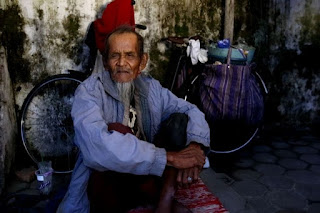
                     He was no longer young. But this 100 year old grandfather has an amazing ability. Yes, Mbah Ujang can speak many languages, ranging from Javanese, Bahasa Medan, English, Japanese, to Dutch.


"I know speak English? I know, speak in Indonesia, Okay," said Mbah Ujang. Mbah Ujang tells when he stepped 28 years, he was brought by the Japanese. There, he worked as a cook and car guard.

Mbah Ujang who came from Brebes, Central Java, this day-to-day work as a scavenger. Since 1971, he spent his life on the roadside around Yogyakarta. Occasionally he stopped at his friend's house. For him, sustenance is already there is a set. Mbah Ujang is never afraid of not being able to eat. "There is only the love of cardboard, plastic, bucket broken, to be patient and nerimo," said Mbah Ujang.


Many people claim that the older the more experience a person has. In addition to experience, should the ability of a person is also more qualified with age is not it?


To some extent, this previously proposed theory fits the figure of Mbah Ujang. A scavenger grandfather found in this area of ​​Yogyakarta has good foreign language skills. Even this century-old man can master at least 5 languages ​​namely English, Japanese, Dutch, Javanese, Minang, Palembang, and of course the Indonesian language.  When asked where his language skills were obtained, Mbah Ujang explained his life story in the colonial era. "When I was 28 years old, I was taken by a Japanese wanderer, so the cook, the car duty, the washerman. Indeed, the man who is now leaving his family in Jakarta and vandalized in Yogyakarta feels very true about the Dutch colonial era and Japanese occupation. But Mbah Ujang did not despair or consider it a bad experience. Precisely it is exploited to develop the ability komunikasinya.


"The language is easy, if heard many times later also understand the meaning," explained the man who sometimes stop at his friend's house. For everyday life, Mbah Ujang work as a scavenger and not too tied to the material that became the priority of most people.


                    Ujang Grand father  is one of the witnesses of colonial colonial history in Indonesia. Although he was a very old age, but his body still looks fit. Grandpa who daily fulfilled the life of scooping used goods is remembered well when Japan came to Indonesia he was young. Now, about the age of Mbah Ujang has reached a century. At that time, the man born in Brebes, Central Java was brought Japan to the city of Medan to work there. He claimed to be forced to work as a cook. After the Japanese occupation, Mbah Ujang moved to various regions. Frequent interaction with many people makes Mbah Ujang able to speak various languages. He speaks fluent Java, Palembang, Minang, English, to Japanese. Until now, he spent his old age in the city of Yogyakarta.

Wednesday, 9 November 2016

GUS DUR STORY

GUS DUR STORY

gus dur


                  The first time he studied, Abdurrahman studied his grandfather, K.H. Hasyim Ash'ari. While at home with his grandfather, he was taught to recite and read the Qur'an. At the age of five he had read al-Qur'an fluently. By the time the father moved to Jakarta, in addition to formal study at school, Gus Dur entered also took private lessons in Dutch. His tutor was Willem Buhl, a German who converted to Islam, who changed his name to Iskandar. To add to the Dutch language lessons, Buhl always presents classical music commonly enjoyed by adults. This is the first time Gu Dur's contact with the West and from here also Gus Dur began to attract and love classical music.


                   Ahead of his graduation at Elementary School, Gus Dur won a writing contest (author) throughout the city of Jakarta and received a gift from the government. This experience explains that Gus Dur has been able to put his ideas / ideas into writing. Therefore it is only natural that in the later period Gus Dur's writings adorn various mass media. After graduating from elementary school, Gus Dur sent his parents to study in Yogyakarta. In 1953 he entered SMEP (Secondary School Economy First) Gowongan, while lodge at Krapyak pesantren. This school, although run by the Roman Catholic Church, but fully uses the secular curriculum. In this school also the first time Gus Dur learn English. Feeling constrained to live in the pesantren world, he finally asked to move to the city and stayed at the home of Haji Junaidi, a local Muhammadiyah leader and an influential person in SMEP. His routine activities, after the dawn prayer recite on K.H. Ma'sum Krapyak, during school day at SMEP, and at night he participated in discussion together with Haji Junaidi and other Muhammadiyah members.

                           As a junior high school student, hobbies to read more getting a place. Gus Dur, for example, was encouraged by his teacher to master English, so within a year or two Abdurrahman spent several books in English. Among the books he had read were Ernest Hemingway, John Steinbach, and William Faulkner. In addition, he also read through the works of Johan Huizinga, Andre Malraux, Ortega Y. Gasset, and several works of Russian writers, such as: Pushkin, Tolstoy, Dostoevsky and Mikhail Sholokov. Gus Dur also devoured some of Wiill Durant's work entitled 'The Story of Civilazation'. In addition to studying by reading English books, in order to improve his English proficiency as well as to explore information, Gus Dur actively listened to the broadcast via Voice of America radio and BBC London. When he learned that Gus Dur was good at Inggis, Mr. Sumatri-a SMEP teacher who was also a member of the Communist Party-gave Lenin's book 'What is To Be Done'. At the same time, the child entering this adolescence has known Karl Marx's Capital Das, Plato's philosophy, Thales, and so on. From this description is clearly illustrated the wealth of information and breadth of Gus Dur's insight. After graduating from SMEP Gus Dur continued his study at Pesantren Tegarejo Magelang Central Java. This pesantren is taken care of by K.H. Chudhari, the humanist, pious and beloved kyai figure. It was Kyai Chudhari who introduced Gus Dur with Sufi rites and inculcated mystical ritual practices. Under the guidance of this kyai, Gus Dur began to make pilgrimages to the sacred tombs of the wali in Java. At the time of admission to this pesantren, Gus Dur brought his entire collection of books, which made the other santri astonished. At this time also Gus Dur has been able to demonstrate his ability in the tumor and speech. In connection with the latter there is an interesting story that should be expressed in this exposure is on ceremonial events held before the fasting at the time of separation of students who finish finished studying-by providing food and drink and bring all the entertainment of the people, such as: Gamelan , traditional dance, lumping horse, jathilan, and so on. Obviously, the entertainment as mentioned above is very taboo for the world of boarding schools in general. However it exists and occurs in Pesantren Tegalrejo.

READ ALSO : BJ HABIBIE
                          INFO BEASISWA


After spending two years at Tegalrejo pesantren, Gus Dur moved back to Jombang, and stayed at Pesantren Tambak Rice. At that time he was approaching 20 years, so in his uncle's pesantren, K.H. Abdul Fatah, he became an ustadz, and became chairman of the security. At the age of 22, Abdurrahman went to the holy land, to perform the pilgrimage, which was then forwarded to Egypt to continue his studies at al-Azhar University. The first time he arrived in Egypt, he was disappointed because he could not directly enter al-Azhar University, but had to enter Aliyah (a kind of preparatory school). At school he was bored, having to repeat the subjects he had taken in Indonesia. To eliminate boredom, Abdurrahman often visited the American library and information service center (USIS) and bookstores where he could get the books he wanted.


                      There was a favorable condition when Abdurrahman was in Egypt, under the rule of President Gamal Abdul Nasr, a dynamic nasioonalis, Cairo became the golden age of intellectuals. The freedom to express opinions has sufficient protection. In 1966 Abdurrahman moved to Iraq, a modern state with an advanced Islamic civilization. In Iraq he entered the Department of Religion at Baghdad University until 1970. During his stay in Baghdad Abdurrahman had a different life experience than in Egypt. In this thousand-night city Abdurrahman got intellectual stimulation not found in Egypt. At the same time he came back in touch with the great books of Western orientalist scholars. He went back to his hobby intensively by reading almost all the books in the University. Outside the world of the campus, Gus Dur diligently visits the sacred tombs of the saints, including the tomb of Sheikh Abdul Qadir al-Jailani, founder of the Qadiriyah congregation. He also writes the teachings of Imam Junaid al-Baghdadi, a founder of Sufism, followed by NU worshipers. This is where Gus Dur finds the source of his spirituality. The political situation that happened in Iraq influenced the development of Gus Dur's political thinking at the time. His admiration for the power of Arab nationalism, especially to Saddam Husain as one of his characters, became diminished when the shaykh he knew, Azis Badri was killed.  After studying in Baghdad Gus Dur intends to continue his studies to Europe. But strict requirements, especially in the language-for example, to enter in the classical study in Kohln, have to master the Hebrew, Greek or Latin languages ​​well in addition to the German language-it can not be fulfilled, the last thing to do is make a visit and become a traveling student, from one university to another. He eventually settled in the Netherlands for six months and founded the Muslim Students Association of Indonesia and Malaysia who live in Europe. For living expenses, he goes to the port twice a month to work as a tanker cleaner. Gus Dur also went to McGill University in Canada to study Islamic studies in depth. However, he finally returned to Indonesia after being inspired by interesting news about the development of the pesantren world. The tour of Gus Dur's study ended in 1971, when he returned to Java and began to enter his new life, as well as his early career journey.


                        Nevertheless, the spirit of learning Gus Dur did not recede. The proof in 1979 Gus Dur was offered to study at a university in Australia to obtain a doctorate. But the good intentions can not be fulfilled, because all the promoters are incapable, and assume that Gus Dur does not need the title. Indeed, in fact some doctoral dissertations from Australia were sent to Gus Dur for correction, guided, and then maintained in front of an academic session.


FULL NAME
KH. Abdurrahman Wahid
DATE OF BIRTH
Jombang, August 04, 1940
FATHER
KH. A. Wahid Hasyim
MOTHER
Ny. Hj. Sholehah
WIFE
Sinta Nuriyah
CHILD
Alissa Qotrunnada
Zannuba Ariffah Chafsoh
Anita Hayatunnufus
Inayah Wulandari
EDUCATION
1966-1970
University of Baghdad, Iraq, Faculty of Adab Department of Arabic Literature
1964-1966
Al Azhar University, Cairo, Egypt, Faculty of Shari'ah (Kulliyah al-Syari'ah)
1959-1963
Pesantren Tambak Beras, Jombang, East Java, Indonesia
1957-1959
Pesantren Tegalrejo, Magelang, Central Java, Indonesia
EXPERIENCE OF POSITION
1999-2001
President of the Republic of Indonesia
1989-1993
Member of the People's Consultative Assembly of the Republic of Indonesia
1987-1992
Chairman of the Indonesian Ulema Council
1984-2000
Chairman of the Board of PBNU Tanfidz